The Eldraeverse

…building civilizations with my space elves in space.

Tag Archives: galari

Trope-a-Day: Electronic Telepathy

Electronic Telepathy: Specifically, the kind built into the eldrae and galari (although with different encodings, originally), and put on general sale by a number of corporations.  See Psychic Powers.

At Least It’s Not A Bar?

“Five scientist-explorers were exploring an abandoned outpost in the Expansion Regions one day when they came across a freshly-excavated artifact, still humming with power and covered in unknown controls.

“The first, a galari, said ‘We should transport this back to our laboratory, so that we can investigate it properly, and spread the word of our discoveries.  Think of what we could learn from it!’

“The second, a kalatri, said ‘Take it to our laboratory, yes, but we must keep this quiet.  It could be dangerous, or disruptive, or corrupting.  It is best that people do not know of it until we can be sure they will not be harmed, and use it well.’

“The third, a codramaju, said ‘We should keep it quiet, but so that we can master it before others know of it.  We could build a hundred new technologies with what we learn, and be wealthy beyond our dreams.’

“The fourth, a linobir, said ‘We should master it for its power.  The elder races built machines powerful beyond imagining.  If this is one of these, the galaxy would be ours for the taking.’

“But the fifth, an eldrae, said nothing – for with the press of a keyswitch, both he and the artifact had vanished away.”

- anonymously-posted extranet joke

First First Contact (4)

CS Extropy Rising, entering Galáré system.
Core, Command Bridge

Two hours later, Svínif looked around the conference table, and wished his old headache back.

“Preliminary reports. Let’s see what we have. Comms?”

“EM emissions from our target world, just as the exception said, all over from log-8 to log-10. Nothing even resembling a standard format, so I’d say they haven’t invented a stardrive while we’ve been in transit, but apart from that…”

“No chance it’s a natural phenomenon?”

“No chance at all. Definitely non-random, and the information entropy’s too high. It’s got to be sapient transmissions. My filters can’t find anything that looks like recognizable audio or video modulation – most likely data, and of a high order.”

“Sensory?”

“Nothing new, yet. We should be getting some good images back from the orbital probes in the next couple of hours, though.” She hesitated. “I canceled the launch program for the ground probes. I thought it might look hostile, dropping them planetside without asking.”

“Good thinking.” Svínif looked around the table again, mentally tallying the officers. “As nothing else has been flagged up as urgent, let’s hold the routine stuff for now.“ His head hurt abominably.

“Well, gentlesophs, this is quite the situation we’re in. If they’re as smart as their comms suggest they are, they’ll have spotted us by now, and have a fair idea what we are. And unless any of you know the universal signal for ’Excuse me, soph, could you spare a megaton of deuterium?’, it’s not like we can turn the ship around and go home.”

“If we stopped the entry burn right now,” the Flight Director confirmed, “We’d have enough Δv to swing around the sun onto a return vector. No fuel for a burn, though. Our frozen hulk would make it home in, oh, 3,500 years or so.”

“So, let’s hope the locals are friendly and don’t take our turning up with a shipload of frozen colonists too badly. Dig out the first contact set, Comms, and — wait, none of that traffic was directed at us yet?”

“Not that I can tell. Maybe they’re waiting for us to make the first move.”

“Well, send them the first sequence-set on the hydrogen line, broad-angle, and we’ll see what we get back. Until then… by the book, gentlesophs, by the book. Assume we’ll be making orbit as planned unless we hear otherwise somehow. If nothing mishcrit comes up, send your status reports to my terminal. Thank you, all.”

As they dispersed to their consoles, he rested his head for a moment on the cool vitrine tabletop.  Well, you’re in the history books now. Just – let it not be for starting the first interstellar war.

To Boldly Go

“INASMUCH as the proven success of the Thirteen Colonies and their foundation by means of lighthugger colony ships has demonstrated the viability of such starships for interstellar voyaging;

“And inasmuch as the reconnection of the Thirteen Colonies to the metropolitan Empire and our Reunification has demonstrated the potential of the stargates to permit fast travel and communication between established worlds;

“And inasmuch as the trusty and profitable relationship between the eldrae of the colony of Galáré and the galari whose homeworld Galáré is has demonstrated the great value of relations, formal and informal, with the other sophont species of our galaxy;

“And inasmuch as Our scientists have detected signs that demonstrate, to a high order of probability, that such sophont life abounds in the universe beyond our few systems;

“And inasmuch as the quest for knowledge and advancement is a core principle of Our Empire;

“WE hereby direct the formation of an IMPERIAL EXPLORATORY SERVICE to seek out and survey systems and worlds beyond the frontiers of Our Empire, and to make contact with such sophont species as may exist thereupon in Our name.”

- Her Divine Majesty Eledië II, Imperial edict “On the Exploratory Service”, 10 years post-Reunification

Trope-a-Day: Starfish Language

Starfish Language: Oh, plenty of them.  Esseli native language, for example, is encoded on RNA strands (although fortunately they can and are more than willing to add extra speech organs as required).  Mirilasté language is also notable for using sequences of musical notes as its “phonemes”, and volume and tempo are as linguistically significant as pitch.  Seb!nt!at and various other solar clades, along with the galari‘s techlepathy, tend to use dialects designed to be transmitted electromagnetically and which translate very poorly into audio.  The qucequql and thegas-giant dwelling sssc!haaaouú use bioluminescence and chromatophores to display changing bands and patterns of color as a form of “speech”.  The mezuar communicate chemically, but primarily communicate through direct neural linkage where their roots and branches grow together.  Myneni communication has both a chemical dialect and one based on a very flexible chime-and-whistle audio generation that most more conventional larynxes can’t manage.  (And the uplifted dogs, of course, retain a certain facility for scent-based communication.)  The nsang communicate principally by writing with spinneret material, in two-dimensional ideograms, augmented by gestures for simple or immediate concepts.

Of course, that’s just the first layer.  Once we get into the difficulties of coping with higher-level grammatical quirks of the language: galari is structured like hypertext; digisapience communication is often discrete heavily-internally structured concept formats designed for packet transmission as high-speed data pulses (“here, have a wiki-database of my communication”); the múrast and embatil, as collegiate intelligences, throw out the tree-structure of most languages in exchange for matrix-hashes – and the mirilasté, curiously enough, use something more like a stack – seb!nt!at is a quantum language, in which it’s possible to tell three stories at once and then collapse the meaning at the end of the sentence; native whale, although fortunately not standard dar-ííche, doesn’t have sentences, but rather indefinitely long songs – whose individual phrases are even more long-winded than Entish – in which everyone can talk at once (their audio-processing brain finds resolving the threads of conversation trivial) and, indeed, modify each others’ sentences on the fly…

…and the difficulties of relatively simple issues like non-gender genders, attitudinals (very important, since They Do Not Speak Nonverbal), evidentials, context-dependent or referential concepts, alien metaphors, different methods of categorization or metaphysical perspectives on time, space, and reality – things get very weird very quickly.

Even Eldraeic, which was designed as a lingua franca for a polyspecific polity, suffers from this – since due to its ecumenical nature, it includes a very, very large set of optional grammatical features designed to cover as many of the quirks of the above languages as possible, a mode-switching grammar, three alphabets, an ideographic representation, and multiple isomorphic dialects to be spoken in different environments and with different apparatus, including underwater, over digital communications channels, by color, and even with nothing except pause and interval.  Speaking pidgin Eldraeic (which is to say, Trade) is easy – but speaking many of the more complex forms is very much not, and its capacity for willful obscurantism is generally acknowledged to be unparalleled.

Trope-a-Day: Immortality

Immortality: In a couple of forms.  The natural immortality of the eldrae and galari, etc., is Type II Undying, without the disease (or, indeed, starvation) exception – at least where potent illnesses are concerned.  This is also the type they’ve developed, named immortagens, and sell on the open market.

Noetic backups, in which one’s mind-state (or, if you like, soul) is recorded in digital storage such that you can conveniently be restored from backup if killed, adds Type IV Resurrective on top of that for those two species, and gives it to everyone else living in a modern and civilized polity, too.  And their little dogs, too.  Literally.

(They are, however, still working on A Means To Avoid The Heat Death Of The Universe.)

First First Contact (3)

Galáré Actual, Galáré System.

The noösphere of Galáré sang with electromagnetic voices.  The galari themselves, crystalline creatures of carbon-wrought silicon,  were the most complex voices in the song, exchanging trills and dithyrambs of information, an endless symphony of knowledge framed in multi-layered harmonies of incredible complexity; not a singular overmind, but a continual conversation on a million topics, each seeking its own harmony.  The simpler voices of lesser orders, the stony plantimal-forms from which the galari arose, the spun-crystal worker-machines, and the computer minds embodied in the planet’s greatest monoliths filled out the chorus; and Galáré itself, so much of its surface worked into matrices in which the knowledge and history, the memories, of the species were imprinted, echoed the song back to them.

Now, though, the song was disturbed.  For centuries, the music of Galáré had been serene, a slow adagio towards a well-planned future, filled with calm and order, endless self-reflection and contemplation of the sciences and philosophies stored within the galari’s great archives.  But today the astronomers sang quick, sharp arias of warning: of the 18.3 MeV glow the oneirists thought most likely for a fusion drive, with blueshift and parallax showing its path clearly.

Someone was coming to Galáré, and the divergent imaginings made the song stutter in jagged dissonance.

A Penny for How

“Thus it is said that an eldrae thinks pacing; a dar-bandal, sniffing; a galari, hovering; a kaeth, fighting; a dar-ííche, floating; a sssc!haaaouú, blowing; a mezuar, standing; an esseli, twitching; a codramaju, merging; a kalatri, sitting; a járaph, of itself; a selyéva, basking; a vlcefc, hanging; a spinbright, watching; an embatil, arguing; a múrast, many times; a seb!nt!at, already; a digisapience, continuously; an azayf, afterwards; and a ulijen, too late.”

- Stereotypes of the Worlds, Imperial University of Almeä Press

Trope-a-Day: Starfish Aliens

Starfish Aliens: Most of them.  Digisapiences, of course, have no bodies at all.  The galari are sophont crystal-virus hybrids with inbuilt techlepathy and mechanical psychokinesis.  The codramaju are pseudo-fungoids which can merge, exchange, and separate bodies and minds at will.  The kaeth are vaguely draconic pseudosaurians with a metal-rich biology.  The hydrogen-breathing sssc!haaaouú are fragile collections of membranes that dwell in the upper layers of gas giants.  The myneni are crystal-based carbohydrosilicate amoeboids with built-in chemosynthetic talents.  The mezuar are a network of collectively sophont purplish-blue trees.  (Yes, as sessile as that implies, although the selyéva are green-blue plantimals – non-sessile photosynthetics – who probably most closely resemble walking broccoli.)  The esseli have engineered themselves into brains with manipulating tentacles and customized personal auxiliary organs, and don’t even remember what they used to look like.  (And the link!n-Rechesh are heading that way.)  The qucequql are ammonia-metabolising octopi from a world of nitrogenous oceans.  The múrast would be simple multiheaded snakes, except that they breathe methane, live in oceans of hydrocarbons, and their primary body structures are constructed of ice.  The ulakha are metal-plated, fast-moving lizardoids who think Venerian conditions are just about right for a planet.  The linobir resemble furless, leathery-skinned, hexapedal, hermaphrodite bears.  The shan kari resemble larger versions of Terran mustelids fairly closely, actually, except they prefer to breathe warm methane.  The mirilasté are legged-serpents with skin we would recognize as essentially plastic, who breathe the most astonishingly noxious fluorine-hydrocarbon soup.  The ktelaki are furry arachnids with trilateral symmetry and multi-branched legs.  The seb!nt!at are star-dwelling creatures of plasma and electromagnetic force.  The celsesh are quadrilaterally-symmetric with a fused-barrel body plan, and sensory organs on stalks in lieu of a head.  The embatil are worm/tentacle creatures whose life cycle begins with individuals, but which merge into single creatures as they mature – while transforming a ganglionic into a collegiate intelligence.  The tennoa are chlorine-breathing radial-crabs blessed/cursed with obligate utilitarianism…

And that’s all before we get to uplifts, neogens, and exotic neomorphic bioshells.

First First Contact (2)

CS Extropy Rising, one light-day outside Galáré system.

Sophont intervention required.

Supercargo processor: Engage emergency revival sequence for Command Conference in accordance with protocol 1030.

Core, Cryobay Ess Zero.

Fire and ice.

Microwaves hammered at the frozen bodies hanging in the thick blue gel that filled the cryotubes, bringing them slowly back up to a temperature suitable for bringing them back to life.  Tapping their energy as flesh thawed, the crude nanites perfused into the bodies’ tissues before chill-down came sluggishly into action, attempting to patch the gross damage of cryostasis with a sensation like ten-thousand red-hot needles, then sending painful trickles of electrical current down raw nerves to coax activity from reawakening muscles and organs.

Flight Commander Svínif Andracanth-ith-Cyranth leaned over the side of his cryotube, wet, naked and shivering, and spewed a long stream of greasy gray-green freezer-porridge onto the deckplates; then hung there, caught between coughing, retching, and trying not to do both at once.  Around him in the bay, he was aware through the sick throbbing in his head of the rest of the command crew doing much the same.

“…I repeat: Non-emergency critical exception in progress.  Command Conference to the bridge, please.  Command Conference to the bridge.”

In Many Shapes and Forms

The ecology of Eliéra is uniquely complex in the known Associated Worlds, since it is not, as most are, the product of either natural evolution, or ancient or modern ecopoesis.  Rather, a few unique survivals excepted, its ecology is a mixture of species from three separate origins and their coevolved descendants; referred to as bluelife, greenlife, and silverlife.  It is believed that the progenitors of these ecologies were transported to Eliéra during the tenure of the Precursor species, and in the case of bluelife and greenlife, that their descendants reflect those ecologies which were best fit to survive and adapt to the world in the absence of the Precursors and thus anyone to tend their gardens and biological preserves.

Both bluelife and greenlife are examples of oxygen-breathing ecologies using the common L-protein/lipid-D-carbohydrate biochemistry, with nucleic acid-based information-storage molecules; although the encoding used for these information-storage molecules differs greatly between the two classes.  There is considerable overlap in the specific compounds (amino acids, for example) used by the two classes, to a sufficient extent that heterotrophs and saprotrophs of both classes find the other edible, although in many cases lacking in some essential nutrients.  Indeed, some members of each class, including the sophont species of Eliéra, the eldrae, now naturally require some essential nutrients from each of the classes in their diet.  (The eldrae, among some other large animal species, are particularly notable for having adopted some symbiotic bluelife organelles into an essentially greenlife makeup, giving them their distinctive indigo blood.)

Bluelife, a class including a large number of non-cellular and single-celled organisms, also includes among its complex organisms the majority – around 85% of species – of Eliéra’s plant life (whose distinctive and predominant blue photosynthetic pigment is the source of the name of the class), a smaller percentage – around 75% of its species – of its animal life (including both scaled and furred hexapedal land animals, four-winged birds, duodecids, and tubefish), 90% of its fungi, and all of its algae and plankton.  It is strongly believed to consist of evolved and/or modified forms of life transplanted from the nearby world of Revallá, which used a near-identical biochemical substrate and set of body plans, the more so when Eliéra bluelife’s adaptations to coexistence with greenlife and, to some extent, silverlife are considered.

Greenlife also includes a large number of non-cellular and single-celled organisms, along with another 14% of Eliéra’s plant life (again, the green photosynthetic pigment, chlorophyll, gave its name to the class), the remaining (with very few exceptions) 30% of its animal life (including both scaled and furred quadrupeds, two-winged birds, arachnids, cetaceans, and bony fish), and nearly 10% of its remaining fungi.  The origin of greenlife is unknown; no world currently known to the Imperial Exploratory Service appears to have a compatible ecology.

The final class of life on Eliéra is the silverlife, a class of lifeforms descended from what are believed to be a number of simple Precursor nanites which survived the destruction of the Precursor civilization, many of them mutated by radiation effects and evolved over time.  By far the vast majority of silverlife is composed of microscopic organisms of the crystallite and metallite kingdoms, of which the most notable are the saerymaharvéi, descended from simple assemblers and responsible for the many crystal deposits and outcroppings across the surface of Eliéra.

Silverlife also includes some simple macroscopic organisms, including some silicate pseudo-plants found in sunlit, rocky areas of appropriate compositions (most prominent are cikril, which forms tall, slender columns of translucent crystals, charged with photoelectricity, and cikrieth, a swamp-dwelling variety of cikril which extracts materials from seawater and forms intertwined resource-sharing complexes), and some colonial organisms roughly analogous to slime molds.  These together make up the remaining 1% of Eliéra’s plant species, and 0.5% of its fungi.

Silverlife in general has many aspects and features in common with the lower lifeforms of Galáré, the homeworld of the galari; while the evidence suggesting their origin in Precursor nanotechnology remains convincing, scientists are studying the possibility of a link between known Precursor nanotechnology and the ecosystem of this world.

- An Introduction to Eliéran Biology, Imperial University of Almeä Press

First First Contact (1)

One light-day outside Galáré system.

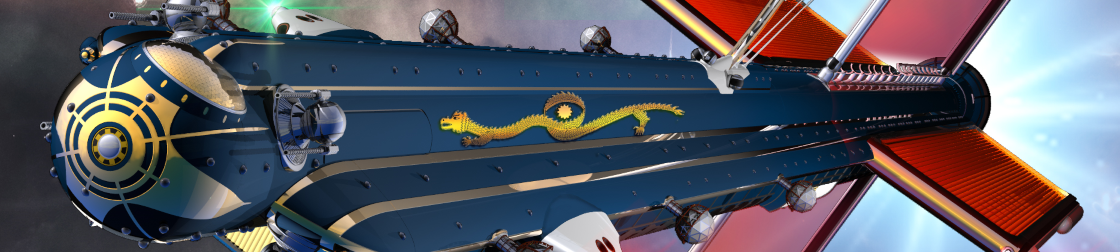
The long plume of the fusion torch flickered out, and the great ship began to rotate slowly, end over end, bringing the foreshield once more into alignment with its direction of travel. The wide radiator vanes of the drive module glowed a bright cherry-red from the torch’s waste heat.

Extropy Rising, the eighth sleeper-ship of the Deep Star program, had finished decelerating into the Galáré system.

In obedience to the programming set up before it had left its construction slip in Talentar orbit, the triple-triple computers which controlled the Rising completed the flip, then turned their attention to the next steps in the entry procedure. A centrifugal ring spun up, throwing a sextet of probes outward to safe ignition distance. Sensors, unused since launch, slid out from behind the foreshield and powered up.

As the computers gorged themselves on the influx of new data, ongoing critical paths were adjusted at thousands of decision gates, fine-tuning the remainder of the mission to match the newly revealed local conditions; precise solar spectra, orbital elements, atmospheric composition…

Extensive electromagnetic emissions from the third planet in the log-8 to log-10 bands. That was outside all defined parameters.

Sophont intervention required.

Follow

Get every new post delivered to your Inbox.

Join 667 other followers

%d bloggers like this: